
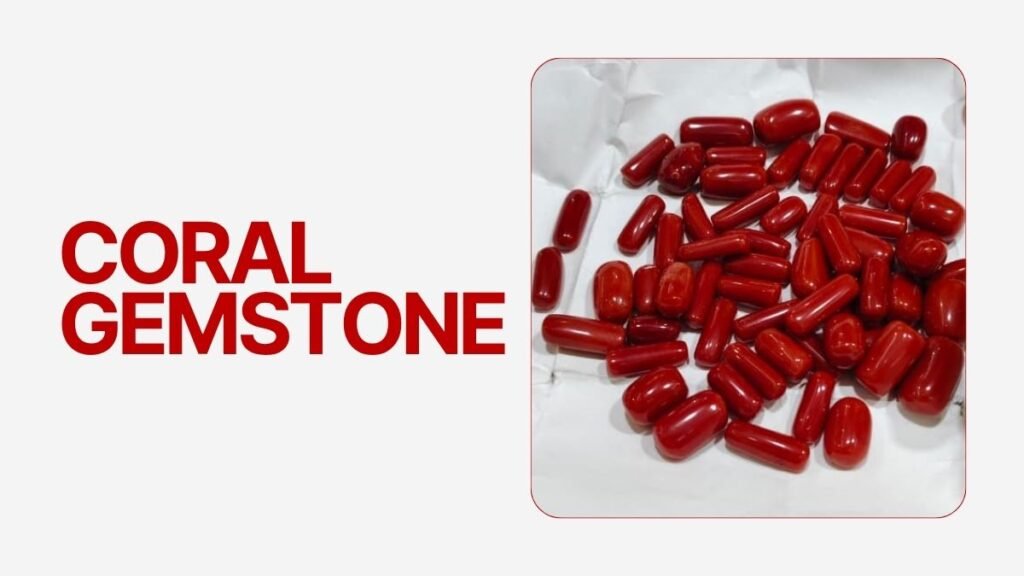
At Ratnanjali Gems and Jewels, we have spent decades separating sea treasure from sea trash. We are not just sellers; we are the bridge between ancient Vedic astrology and your jewellery box. Based in the heart of India, we specialise in loose, untreated, and certified original red coral because we know that a fake stone does more than hurt your wallet—it disrupts your cosmic energy.
Whether you are searching for a powerful japanese red coral stone or a reliable italian moonga 7 ratti, we offer both varieties with complete transparency. No hidden treatments. No borrowed lab reports. Just honest gemstones and astrological guidance you can trust. So when you read this guide, know this: we wrote it so you never get cheated again.
Why your astrological future might depend on knowing the difference
Picture this: You’re at a jewellery shop in Jaipur. The lights are warm. The glass cases sparkle. A seller places two red coral stones before you. Both look similar. Both feel heavy. But one costs twice as much as the other. You freeze. Which one do you pick?
Welcome to the confusing, high-stakes world of buying a coral gemstone.
For centuries, red coral—or Moonga as we call it in India—has been the go-to stone for calming the fiery planet Mars (Mangal). But here’s the catch. Not all red coral is born equal. In fact, two varieties dominate the market: Japanese red coral and Italian red coral. And mixing them up? That could cost you more than just money.
Let’s fix that. Right now.
What Exactly Is a Red Coral Gemstone?
Let’s start simple.
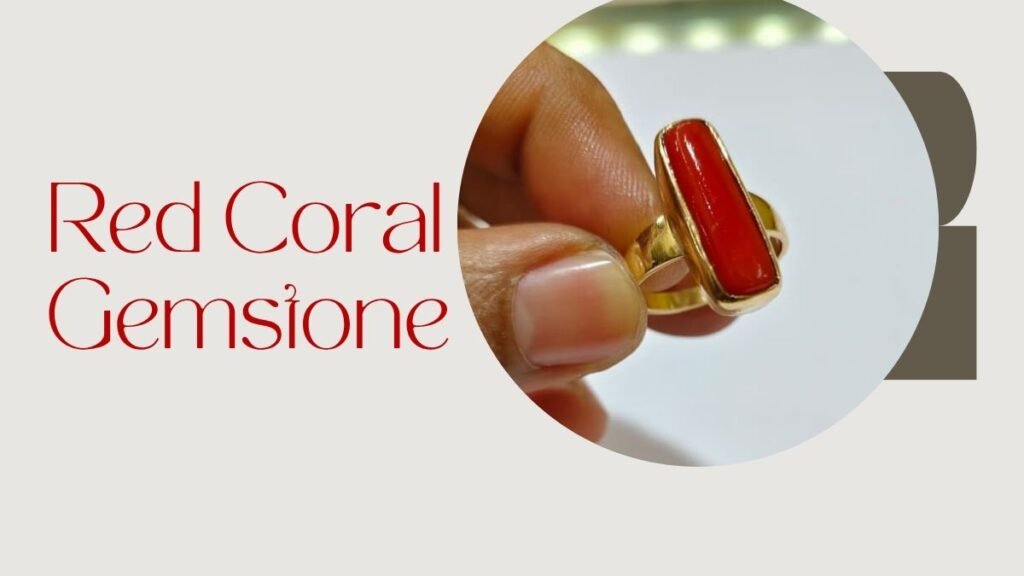
A red coral gemstone isn’t like a ruby or an emerald. Those come from the ground. Coral comes from the sea. It’s the skeleton of tiny marine creatures called polyps. They live deep in the ocean. They grow slowly—sometimes just a few millimetres per year. Over decades, they form tree-like branches in stunning shades of red.
This organic origin makes coral unique. It’s alive. Well, it was alive. That gives it a special energy. Astrologers swear by it. Collectors chase it. And forgers? They love faking it.
In India, original red coral is sacred. Astrologers recommend it for people with a weak Mars in their birth chart. Wearing it is said to bring courage, confidence, and even help with marriage delays. But here’s the truth nobody tells you: wearing fake coral is worse than wearing none at all.
So how do you spot the real deal? Let’s start with the two biggest names in the game.
Japanese Red Coral Stone vs Italian Red Coral Stone: The Face-Off
This is the million-rupee question.
Both come from the sea. Both are red. But they are not the same. Not even close.
| Feature | Japanese Red Coral | Italian Red Coral (Moonga) |
|---|---|---|
| Scientific Name | Corallium japonicum | Corallium rubrum |
| Colour | Deep, uniform ox-blood red | Lighter, orange-red to pinkish-red |
| Density | Very dense. Feels heavy. | Less dense. Lighter feel. |
| Surface | Smooth, almost waxy | Visible natural条纹 (lines) |
| Rarity | Very rare. Expensive. | More common. Affordable. |
| Astrological Use | Strong for Mars. Intense energy. | Good for Mars. Balanced energy. |
| Availability | Limited. Mostly old stock. | Widely available. |
The Deep Dive
Japanese Red Coral Stone
Think of this as the Rolls-Royce of corals. It grows in the waters around Japan and Taiwan. The colour is a deep, consistent blood red. No patches. No white spots. The surface feels smooth like wax. When you hold it, it feels surprisingly heavy. That density means it takes a high polish. Jewellers love working with it.
But here’s the catch. Japan has strict laws now. Mining is heavily restricted. So genuine red coral japanese pieces are becoming harder to find. Prices have shot up. If someone offers you a “Japanese coral” at a cheap price, run. Seriously. Run.
Italian Red Coral (Moonga)
Italy’s version comes from the Mediterranean Sea, mainly near Sardinia and Naples. It’s still beautiful. But the colour is different. Think sunset orange-red. Sometimes it leans pinkish. It has natural lines and grooves on the surface. These aren’t flaws. They’re proof of authenticity.
In India, italian moonga 7 ratti is the most common recommendation for astrological wear. Why? Because it’s effective without being shockingly expensive. It balances Mars without overwhelming your system. Think of it as a luxury sedan—reliable, stylish, and gets the job done.
So which one wins? There’s no winner. There’s only what’s right for you. Your budget. Your astrological needs. Your personal taste.
What Does “7 Ratti” Mean for an Italian Moonga Stone?
If you’ve ever shopped for gemstones in India, you’ve heard the word ratti. It sounds mysterious. It’s not.
Ratti is a traditional Indian unit of weight. One ratti equals about 0.91 carats. Or roughly 182 milligrams. The name comes from the ratti seed (Abrus precatorius). Ancient traders used these seeds as weights because they’re surprisingly uniform.
So when you hear italian moonga 7 ratti, it means the stone weighs roughly 6.4 carats. Or about 1.28 grams.
But here’s the thing: weight isn’t everything. Two stones can both be 7 ratti but look completely different. Why? Density.
A japanese red coral stone is denser. So a 7 ratti Japanese piece will look smaller physically than a 7 ratti Italian piece. The Italian stone takes up more space for the same weight.
| Ratti | Carats (approx) | Grams (approx) | Suitable For |
|---|---|---|---|
| 5 ratti | 4.55 carats | 0.91 g | Children, slim fingers |
| 6 ratti | 5.46 carats | 1.09 g | Small to medium build |
| 7 ratti | 6.37 carats | 1.27 g | Average adult (most common) |
| 8 ratti | 7.28 carats | 1.45 g | Larger fingers, stronger Mars |
| 9 ratti | 8.19 carats | 1.64 g | Heavy build, intense remedies |
For most Indian adults, 7 ratti is the sweet spot. It’s visible on the finger. It carries enough weight for astrological effect. And it won’t look like a boulder on your hand.
Is Japanese Red Coral Stone Suitable for Astrological Wear (Mangal/Mars)?
Short answer: Yes. But with conditions.
Long answer: Let’s talk about Mars.
In Vedic astrology, Mars is the commander. He’s energy, aggression, passion, and courage. When Mars is weak in your chart, you might feel lazy. Scared. Indecisive. Your career stalls. Relationships feel stuck. That’s when you need Moonga.
Japanese red coral stone carries intense Mars energy. It’s not subtle. It’s like drinking an espresso instead of tea. If your Mars is only slightly weak, Japanese coral might overcorrect. You could become short-tempered. Impulsive. Aggressive.
That’s why many Indian astrologers recommend Italian coral first. It’s gentler. It balances Mars without pushing you over the edge.
But if your Mars is very weak? Or if you’re in a profession that needs raw courage—military, police, sports, leadership? Then Japanese coral can be a game-changer.
Here’s a rule of thumb from veteran astrologers:
- First-time coral wearer? Start with Italian.
- Worn coral before? Consider Japanese.
- Already short-tempered? Avoid Japanese.
- Need serious career push? Japanese might help.
Always consult an astrologer. Not because the stone is dangerous. But because timing matters. The right stone on the wrong day does nothing. The right stone on the right day? Magic.
How to Verify You’re Buying an Original Red Coral Stone
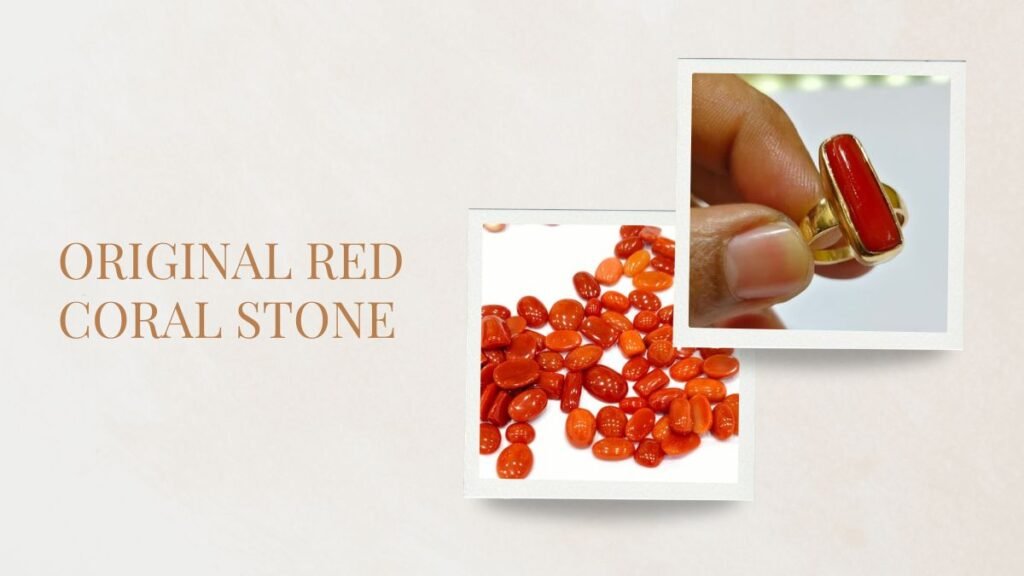
Let’s be real. The market is full of fakes. Glass. Plastic. Bleached bamboo. Even cow bone dyed red. How do you protect yourself?
Here’s your five-point verification system.
1. The Milk Test (Old but Gold)
Dip your original red coral in a glass of raw milk. Leave it for an hour. Genuine coral will turn the milk slightly pink. Fake coral won’t. Why? Natural coral is slightly porous. It releases trace minerals into the milk. Science meets tradition.
2. The Acetone Test (For Serious Buyers)
Put a drop of nail polish remover (acetone) on a cotton bud. Rub it on an inconspicuous spot. If colour comes off, it’s dyed. Real coral won’t bleed.
3. The Magnification Test
Use a jeweller’s loupe (10x magnification). Look closely. Natural coral has a unique grain pattern—like tree rings but finer. Fake coral looks smooth or has air bubbles (glass) or flow lines (plastic).
4. The Weight Test
Hold the stone. Does it feel right? Original red coral is surprisingly heavy for its size. If it feels light like plastic, put it down.
5. The Lab Certificate
This is non-negotiable for expensive pieces. Ask for a certificate from a recognised lab like IGI, GIA, or a government-approved Indian lab. The certificate should mention:
- Species (Corallium rubrum or Corallium japonicum)
- Natural origin (not treated or dyed)
- Weight in carats and ratti
- Any treatments (ideally none)
Red Flags to Watch For
- Price too good to be true (Japanese coral under ₹5,000 per ratti? Fake.)
- Seller avoids showing under magnification
- No return policy
- “Special discount for cash only”
Do You Sell Loose Red Coral Gemstones in Both Japanese and Italian Varieties?
Yes. And this is where we get honest.
Ratnanjali Gems and Jewels specialises in loose, untreated, astrologically-grade gemstones. They carry both Japanese and Italian varieties. You can buy them as loose stones. No settings. No extra charges. Just the stone.
Here’s what you can expect:
| Variety | Weight Options | Price Range (per ratti) | Best For |
|---|---|---|---|
| Italian Moonga | 3 to 12 ratti | ₹1,500 – ₹3,500 | First-time buyers, balanced effect |
| Japanese Red Coral | 4 to 9 ratti | ₹5,000 – ₹12,000 | Intense Mars, experienced wearers |
Prices are estimates. Check current rates at Ratnanjali Gems and Jewels.
The team at Ratnanjali also offers:
- Lab certification with every stone
- Free astrological consultation before purchase
- 7-day return policy (unused stones only)
- Shipping across India with insurance
You can visit their store or order online. Either way, ask for the certificate. Always.
How to Wear Your Coral Gemstone (The Right Way)
Buying the stone is step one. Wearing it correctly is step two. Skip this, and you’ve wasted your money.
Metal Choice
- Gold – Best for Mars energy. Traditional. Expensive but effective.
- Silver – Works well. More affordable. Good for testing the stone’s effect.
- Panchdhatu (five metals) – For specific astrological remedies. Ask your astrologer.
Finger and Day
- Ring finger (right hand for men, left hand for women) – Standard.
- Tuesday morning – Mars’s day. Auspicious.
- Shukla Paksha (waxing moon) – Best time.
The Mantra
Clean the stone with raw milk and Ganga water. Chant this mantra 108 times:
Om Angarakaya Namah
Then wear the ring. Don’t remove it for the first seven days. After that, take it off only during sex, surgery, or heavy physical work.
What to Expect
First 40 days are a test. Mars might stir things up. Old arguments resurface. You feel more energy. More anger too. That’s normal. It settles after 40 days. If it doesn’t, remove the stone. It’s not for you.
Common Myths About Red Coral Gemstone (Busted)
Myth 1: Darker red is always better.
False. Italian coral is naturally lighter. Forcing it to look dark often means dye. Natural colour varies by species.
Myth 2: Bigger stone = stronger effect.
Not really. A 5 ratti Japanese coral can be more powerful than a 9 ratti Italian. Density and origin matter more than size.
Myth 3: Coral can be recharged like crystals.
Coral is organic. Once it cracks or fades, the energy is gone. You can’t “recharge” it. You replace it.
Myth 4: All red coral is endangered.
Partially true. Japanese coral is protected. Italian coral is regulated but still available. Always buy from ethical sources.
Myth 5: Lab-grown coral works the same.
No. Lab-grown coral has no astrological energy. It’s just decoration. Don’t wear it for Mars remedies.
Final Checklist Before Buying Your Coral Gemstone
Use this list. Save yourself from regret.
- Know your Mars placement (consult an astrologer first)
- Decide between Japanese or Italian based on your needs
- Choose a weight (7 ratti is standard for adults)
- Ask for lab certificate (no certificate = no purchase)
- Do the milk test at home after buying
- Check return policy before paying
- Buy from a trusted seller like Ratnanjali Gems and Jewels
- Never buy “bargain” coral from street vendors or unknown websites
Your Turn Now
Here’s the thing about coral gemstone. It’s not just jewellery. It’s not just an investment. It’s a tool. A tool to fix a planet that’s acting up. A tool to bring courage when you feel weak. A tool to push your career when it’s stuck.
But only if you get the real thing.
So ask yourself: Do you want to guess? Or do you want to know?
Visit Ratnanjali Gems and Jewels today. Ask for their loose red coral gemstone collection. Compare Japanese and Italian side by side. Hold them. Feel the weight. See the difference.
Your Mars is waiting. Give it the right tool.
Have you worn Moonga before? Share your experience in the comments below. Or DM us your questions. We reply to every single one.
Frequently Asked Questions (FAQs)
1. Does Ratnanjali Gems and Jewels sell loose red coral gemstones in both Japanese and Italian varieties?
Yes. Ratnanjali Gems and Jewels carries both types as loose, untreated stones. You can buy a japanese red coral stone for intense Mars energy or an italian moonga 7 ratti for balanced, everyday astrological wear. No settings. No hidden fees. Just the pure stone with a lab certificate.
2. How can I be sure that Ratnanjali Gems and Jewels sells only original red coral?
Every original red coral sold by Ratnanjali Gems and Jewels comes with a government-approved lab certificate. They also encourage you to do the milk test or magnification test at home after purchase. If the stone fails, they offer a full refund within seven days. That is their promise.
3. Does Ratnanjali Gems and Jewels offer astrological advice before buying a coral gemstone?
Yes. Their team includes in-house astrologers who check your Mars placement before recommending a stone. They will tell you if you need a japanese red coral stone or an Italian one. They will also suggest the right weight—like italian moonga 7 ratti—based on your body type and birth chart.
4. What is the price difference between Japanese and Italian coral at Ratnanjali Gems and Jewels?
Japanese coral costs more because it is rarer. At Ratnanjali Gems and Jewels, Italian coral ranges from ₹1,500 to ₹3,500 per ratti. Japanese red coral gemstone ranges from ₹5,000 to ₹12,000 per ratti. A standard italian moonga 7 ratti (about 6.4 carats) typically costs between ₹10,500 and ₹24,500.
5. Does Ratnanjali Gems and Jewels ship coral gemstones across India?
Absolutely. They ship loose red coral gemstone pieces to every state in India. Each order comes with insurance and a tracking number. You can also visit their physical store to compare japanese red coral stone and Italian varieties side by side before buying.